
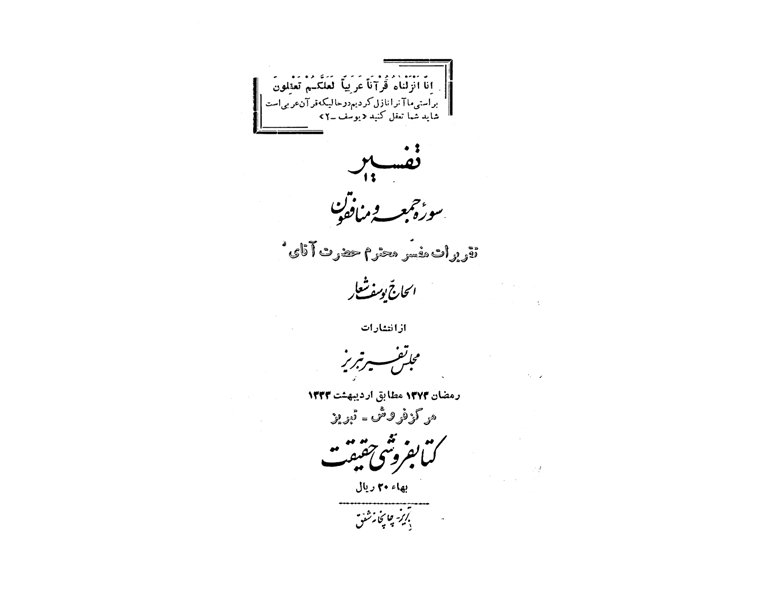
PDF تفسیر سورة جمعه و منافقون
تفسیر سورة جمعه و منافقون، تفسیری است از قرآن به قرآن، و در مقام توضیح تسبیح تشریعی و تکوینی، و نیز واجب بودن نماز جمعه، که در آن روزگار حواله به رجعت امام زمان و خواندن نماز با ایشان میشد. در این جزوه به تفسیر سورة منافقون و بررسی دشمنان پیامبر نیز مبادرت شده است!
استاد یوسف شعار
(خرداد 1281 تبریز- 10 اردیبهشت 1352 تهران)
یوسف شعار در خرداد 1281 در تبریز چشم به جهان گشود. در مدرسة اتحاد تبریز، علوم جدید را آموخت، مقدمات فارسی و صرف و نحو عربی را فراگرفت، و در بیستسالگی به مدرسة علوم دینی طالبیه و جعفریه رفت، و به تحصیل علوم فقه و اصول و معانی و بیان پرداخت. یوسف آنجا آموخت که قرآن قابل فهم است، و بدینسان یک جنبش روشنفکری را در تبیین دین و جامعه بنیان نهاد. گرچه او از خرافات و اوهام به رد مذاهب باطل کوشش مینمود، اما رویکرد او و شیوة عملش که اسوة بسیار آزاداندیشان شد، مکاتب نوین آزادی اجتماعی و سیاسی را پایه نهاد. و اینگونه مخالفتها در منافع از دسترفته از سوی دکانداران آغاز شد. از مساجد رانده شد، و عواملِ نادانِ مرتجعین به مجلسش یورش میبردند و تهدید میکردند، اما او جلسات سیار تفسیر قرآن را در سال 1304 بنیان نهاد، و بعدها جلسات قرآن را در منزل خود در مقصودیه دایرکرد. پس آنگه، به رغم مخالفتها از سال 1340 در تهران ادامه داد. در این مجالس، جوانان و روشنفکران جمع میشدند. زمانی که ساواک او را احضار کرد، به او اتهام وارد کردند که در مجلس شما، نهضت آزادی، جبهة ملی، مجاهدین خلق ایران، و گروههای بیشماری از صاحبان کرسیهای دینی، و چپگراها رفت و آمد میکنند. وی با زیرکی پاسخ داده بود: «من قرآن درس میدهم، شما هم میتوانید حضور یابید!»
از وی آثار مکتوب بسیارکمی به جا مانده، که در زمرة آموزشهایِ حضوری و مجالس برگزارشده و کتابها و آثار و نوشتههای دیگران، و تألیفات استاد که به نام دیگران طبع میشد، میباشد:
- مقدمات تفسیر، 1323 خورشیدی
- محکمات و متشابهات قرآن، پیش از 1323
- تناقضات پیمان و پرچم، ( با نام م. توحیدی) در نقد ماهنامههای پیمان و پرچم احمد کسروی، 1323
- تفسیر سورة جمعه و منافقون، 1333
- تفسیر آیات مشکله، 1339
- پاسخ به کتاب تفسیر صحیح آیات مشکله(که در رد تفسیر آیات مشکله، توسط سید هادی خسروشاهی، در سال 1340 نوشته شده)، جزوة دستنویس،1340 خورشیدی
Yusuf Sheār was born in June 1892 in Tabriz. In Tabriz Union School, he learned the new sciences, learned the basics of Persian and Arabic syntax, and at the age of 20 he went to the School of Religious Sciences in Talebiyah and Jafariyah, where he studied jurisprudence, principles, meanings, and expressions. Yusuf learned there that the Qur’an can be understood, and thus founded an intellectual movement in the explanation of religion and society. Although he tried to reject false religions from superstitions and illusions, his approach and manner of action, which became very free-thinking, founded the new schools of social and political freedom. And this kind of opposition started from the lost interests of the shopkeepers. He was expelled from the mosques, and the reactionary ignorant agents attacked and threatened his assembly, but he established the mobile meetings of Qur’an interpretation in 1925, and later held the meetings of the Qur’an at his home in Maqsoodiyeh. So, despite the opposition, he continued in Tehran since 1961. In these gatherings, young people and intellectuals gathered. When SAVAK summoned him, they accused him that the Freedom Movement, the National Front, the People’s Mojahedin of Iran, and countless groups of religious chair holders and leftists come and go in your parliament. He cleverly replied: “I teach Quran, you can also attend!”
There are very few written works left by him, which are in the category of face-to-face trainings and gatherings, books, works and writings of others, and the works of the professor that were published in the name of others:
– Preliminaries of Tafsir, 1944
– Qur’anic verses and analogies, before 1944
– Contradictions of Peyman and Parcham, (under the name of M. Tawhidi) in the criticism of
Ahmad Kasravi’s Peyman and Parkhum monthly, 1944
– Tafsir of Surah Jum’a and the Hypocrites, 1954
– Tafsir of the verses of Moshkila, 1960
معرفی کتاب:
تفسیر سورة جمعه و منافقون، تفسیری است از قرآن به قرآن، و در مقام توضیح تسبیح تشریعی و تکوینی، و نیز واجب بودن نماز جمعه، که در آن روزگار حواله به رجعت امام زمان و خواندن نماز با ایشان میشد. در این جزوه به تفسیر سورة منافقون و بررسی دشمنان پیامبر نیز مبادرت شده است!
book introduction:
Tafsir of Surah Jumā and the hypocrites is a commentary from the Qur’an to the Qur’an, and in the position of explaining the Islamic and developmental glorification, as well as the obligation of the Friday prayer, which in those days used to refer to the return of the Imams of the time and to pray with them. In this booklet, the interpretation of Surah Al-Munāfiqun and the analysis of the Prophet’s enemies have also been attempted!
| ویژگی های کتاب | ||||||||||||
|---|---|---|---|---|---|---|---|---|---|---|---|---|
|
||||||||||||
.فقط مشتریانی که این محصول را خریداری کرده اند و وارد سیستم شده اند میتوانند برای این محصول دیدگاه(نظر) ارسال کنند.
هیچ پرسشی یافت نشد
برای ثبت پرسش، لازم است ابتدا وارد حساب کاربری خود شوید


نقد و بررسیها0
هنوز بررسیای ثبت نشده است.